Sewer System Inspection Guide: Protecting Your Home's Foundation and Health

Over 60% of municipal sewer systems in North America are now more than 30 years old, which makes a proactive sewer system inspection a vital part of responsible homeownership. It's unsettling to think that the very lines meant to keep your home clean could be slowly undermining your foundation. You might feel caught between the fear of a sudden sewage backup and a deep distrust of high-pressure plumbing tactics that prioritize sales over craftsmanship. We understand that you value your home's longevity and want a steady, reliable expert to help you maintain your property with integrity.
A professional sewer scope is the most ethical way to gain total transparency into your home's health. In this guide, we'll explain how these high-definition tools identify hidden cracks or root intrusions before they lead to catastrophic foundation repairs. You'll learn about the differences between aging cast iron and modern PVC pipes, and how video-backed evidence protects your property's resale value. We're here to provide the clear, methodical insights you need to prevent emergencies and ensure your home remains a stable sanctuary for years to come.
Table of Contents
What is a Sewer System Inspection and Why Is It Critical?
A sewer system inspection is a non-invasive procedure that uses a high-definition borescope camera to provide a clear view of your home's waste lines. A sewer scope is a preventative diagnostic tool used to visualize the internal condition of underground pipes. This specialized technology allows us to travel the entire path from your home's main cleanout all the way to the city tap or your septic tank. While a standard home inspection is helpful for evaluating visible fixtures, it often stops at the walls. A professional assessment goes deeper, utilizing a video drain inspection process to identify structural defects, blockages, or pipe deterioration that would otherwise remain hidden until a crisis occurs.
The Role of a Sewer Scope in Residential Maintenance
How Central Texas Soil Impacts Your Sewer Line
In Austin, Round Rock, and Pflugerville, our greatest challenge is often the soil itself. Central Texas is famous for expansive clay soil, which acts much like a sponge. It swells significantly when wet and shrinks during our intense drought cycles. This constant movement puts immense stress on underground pipes, frequently leading to cracks or "bellies." A belly is a low spot in the pipe where waste collects because the soil beneath it has shifted or settled. These sagging sections are common in our region and are a primary cause of recurring clogs. Understanding these geological factors is part of the local expertise we bring to every diagnostic report. We don't just see a pipe; we see how the Texas landscape is interacting with your home's long-term stability. Our methodical approach ensures that we identify these shifts before they compromise your plumbing's integrity.
The Video Drain Inspection Process: What to Expect
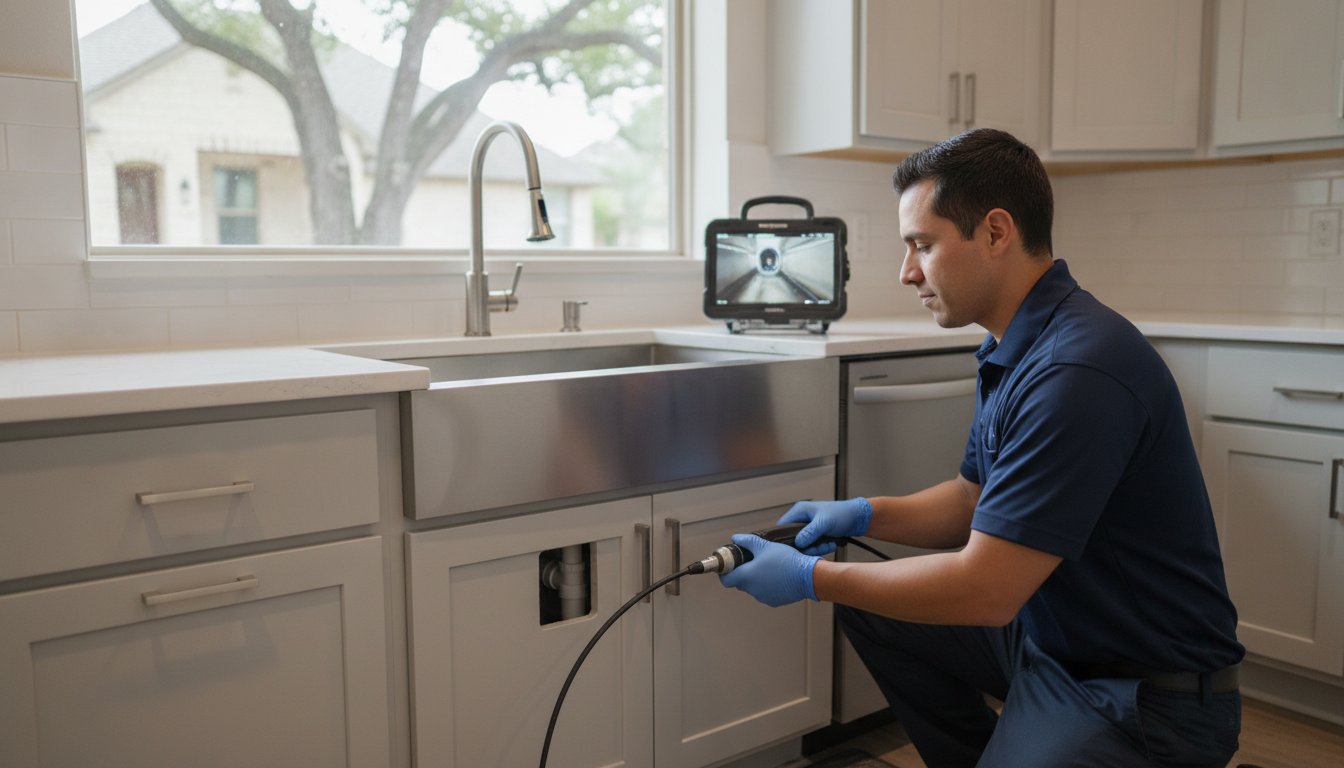
While some might claim a sewer system inspection is a quick five-minute task, a truly thorough assessment is a methodical journey through your home's hidden infrastructure. The process begins with our team locating the main sewer cleanout, which is the designated entry point for our diagnostic equipment. This access point is typically found in the yard or near the foundation. From here, we carefully feed a flexible, fiber-optic cable into the line. This isn't just a simple camera on a string; it's a sophisticated piece of technology designed to navigate the twists and turns of your plumbing with precision.
As the cable travels, it transmits a live feed to a high-definition monitor for real-time monitoring. This allows us to provide an immediate diagnosis while you watch. We record the entire path from the cleanout to the city tap, creating a digital report that serves as a permanent record of your system's condition. This documentation is a vital part of Protecting Your Home's Foundation and Health, providing you with a verifiable history of your property's underground health. This methodical approach ensures that no detail is overlooked, reflecting our commitment to the right way of doing things.
Modern Technology: The High-Definition Sewer Camera
The tools we use represent a bridge between traditional craftsmanship and contemporary innovation. Our cameras are equipped with self-leveling heads, which ensure the image on the screen remains upright even as the cable rotates through bends. High-lumen LED lighting is essential in the dark, wet environment of a sewer pipe, as it reveals cracks or obstructions that would otherwise remain invisible. Additionally, sonde transmitters within the camera head allow us to pinpoint the exact location and depth of a problem from above ground. This eliminates guesswork and ensures that if a repair is necessary, we know exactly where to start.
What the Plumber Sees During the Scope
Interpreting the footage requires an eye trained by decades of trade experience. We look for the subtle sheen of standing water, which often indicates a pipe belly where the line has sagged due to soil movement. We also watch for the delicate, spider-web patterns of early root intrusion. These tiny hairs can eventually expand and destroy concrete or clay pipes. In many cases, the camera reveals that a homeowner simply needs professional drain cleaning in Austin TX rather than a major repair. However, being able to distinguish a simple blockage from a structural break is what protects your home's long-term stability. If you've noticed your drains slowing down, a quick look from the experts at Garrett's Plumbing can provide the clarity you need.
6 Warning Signs You Need a Sewer Inspection Immediately
Your home often speaks to you before a plumbing crisis occurs. Identifying these signals early can be the difference between a simple maintenance visit and a total system failure. While a single slow sink might just be a local clog, persistent slow drains across multiple fixtures in the house usually point toward a deeper issue in the main line. If your bathtub drains slowly while the kitchen sink is also struggling, it's time to consider a professional sewer system inspection. This isn't about looking for a quick fix; it's about diagnosing the root cause of your home's drainage health.
Unexplained foul odors are another clear red flag. Sewer gas should never be present in your yard or bathrooms. If you catch a whiff of rotten eggs or sulfur, it suggests a crack or a breach in the line that is allowing gases to escape. Similarly, keep an eye on your lawn. Lush, green patches of grass that grow significantly faster than the rest of the lawn might look healthy, but they often indicate a subterranean leak. Sewage acts as a potent fertilizer, and these vibrant spots are frequently found directly above a leaking pipe. Other common signs include:
Frequent backups or "gurgling" sounds coming from the toilets when water is running elsewhere.
New cracks appearing in your foundation or interior drywall, suggesting soil saturation from a leak.
Persistent pest issues, such as cockroaches or rodents, that find entry points through broken waste lines.
Identifying Red Flags in Older Austin Neighborhoods
Homes built before 1980 in established areas like Crestview, Allandale, or Zilker require a higher level of vigilance. Many of these properties were constructed using "Orangeburg" pipes, which are made of layers of wood pulp sealed with coal tar. These pipes have a limited lifespan and a high tendency to collapse under the pressure of Central Texas soil. Additionally, the beautiful, mature tree canopies in these neighborhoods present a constant challenge. As these trees grow, their root systems naturally seek out the moisture inside your sewer lines. A methodical sewer system inspection is the only way to see if these roots have begun to compromise your pipes before they cause a total blockage.
The Hidden Costs of Ignoring Sewer Line Issues
Delaying an inspection rarely saves money in the long run. A small, undetected leak can quickly evolve into a major leak detection service requirement as the escaping water erodes the soil beneath your slab foundation. The financial impact of raw sewage damaging your flooring, cabinetry, and personal belongings can be staggering. Beyond the property damage, there are genuine health risks to consider. Mold and bacteria thrive in the damp environments created by sewer leaks, which can affect the air quality inside your home. Taking a proactive approach is a matter of protecting both your family’s health and your home's hard-earned resale value.

Interpreting Your Sewer Inspection Report
Once the video portion of the diagnostic is complete, the next step is translating those high-definition images into a clear, actionable plan. A professional sewer system inspection report doesn't just list problems; it provides a vital roadmap for your home's stability. One of the most common findings in our region is a "belly." As we discussed regarding our local expansive soil, these low spots occur when the ground shifts, causing a section of the pipe to sag. Water and debris collect in these depressions, creating a persistent trap for clogs that simple plunging cannot resolve. Our report will show you exactly where these sags are located and how they are affecting your overall drainage.
Root intrusion is another frequent discovery during a comprehensive assessment. Even the smallest root hair can find its way into a microscopic crack in concrete or clay pipes. Once inside, the root expands as it feeds on the moisture, eventually acting like a slow-motion explosion that shatters the pipe from the inside out. We also look for offset joints. This happens when two sections of pipe become disconnected due to shifting soil, creating a ledge where waste catches. This disconnection is particularly dangerous because it allows water to leak directly into the soil beneath your foundation, potentially leading to the erosion issues we've already highlighted.
Structural Damage vs. Routine Clogs
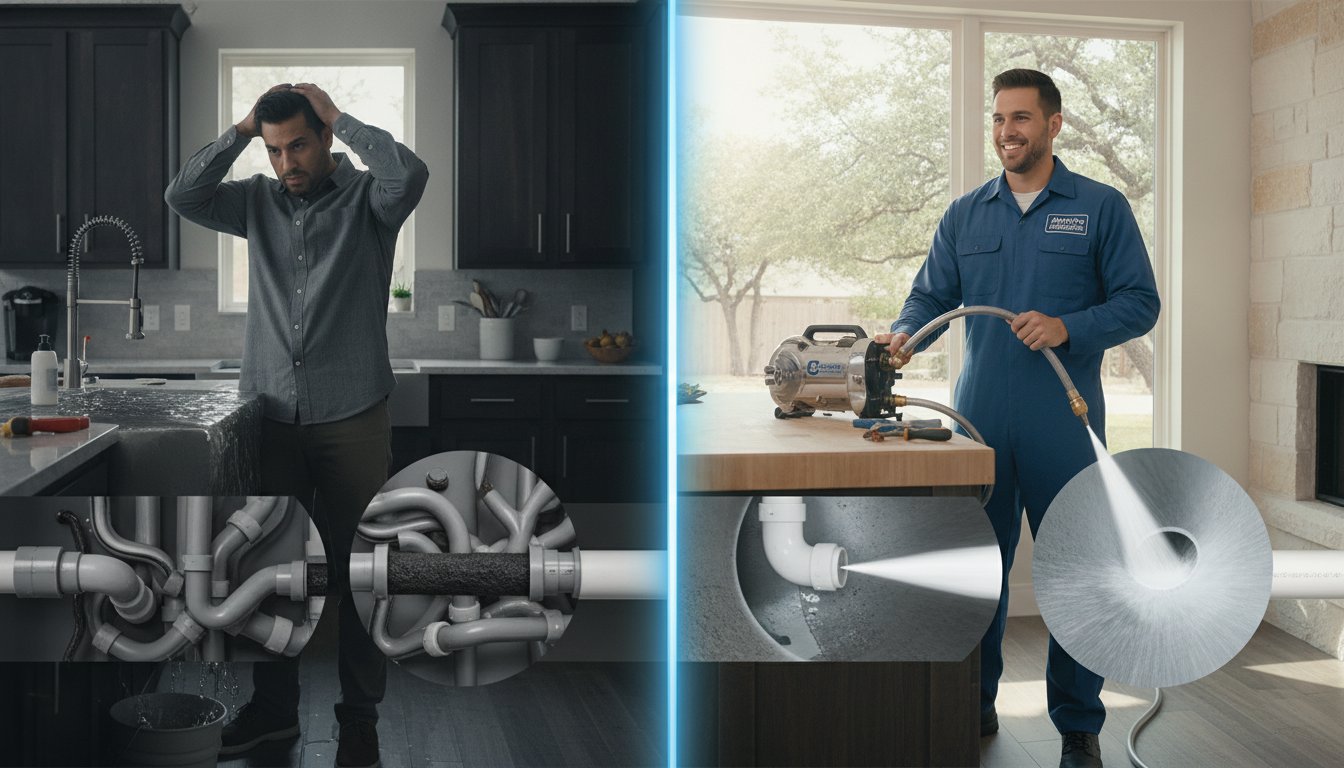
It's vital to distinguish between a simple blockage and a true structural failure. In many cases, the camera reveals that a simple snake or hydro-jetting service is all that's required to restore your pipes to peak performance. However, when the camera shows a collapsed section or a severe offset, a partial or full replacement may be necessary to protect your property. Structural offsets often require excavation while scale buildup can frequently be scoured away. This distinction is critical for your home maintenance budget. If you want to ensure your pipes are handled with the care of a master craftsman, you should schedule a sewer system inspection with Garrett's Plumbing to get a definitive answer.
Common Pipe Materials in Central Texas
The age of your home often dictates what we'll find during the scope. Understanding your pipe material is essential for interpreting the results of a sewer system inspection. PVC is the modern standard used in newer developments across Round Rock and Pflugerville. It's prized for its durability, smooth interior, and high resistance to root penetration. Many mid-century homes in Austin still rely on cast iron lines. While sturdy, cast iron is prone to internal rusting, known as scaling, and "channeling," where the bottom of the pipe eventually wears away after decades of use. Clay pipes are frequently found in our oldest historic neighborhoods. While clay is a natural material, it's highly susceptible to root intrusion and cracking as the earth moves. Our methodical approach ensures that we treat each material with the specific expertise it requires.
The Garrett's Plumbing Approach: Integrity and Local Expertise
At Garrett's Plumbing, we believe that a sewer system inspection is only as good as the eyes behind the camera. We bring four generations of trade knowledge to every diagnostic report, blending old-school reliability with the latest video technology. Our approach is methodical and grounded in the belief that a business should be a steady, trusted presence in its community. We don't just see a technical task; we see an opportunity to protect a neighbor's home and provide the honest assessment they deserve. Serving Austin, Round Rock, Pflugerville, and the surrounding areas, we prioritize your long-term interests over a quick transaction. Our history in this region means we've seen every type of soil shift and pipe failure imaginable; we use that collective knowledge to guide every homeowner we serve.
One major weakness in the industry is the gap between identifying a problem and actually solving it. Some companies focus solely on inspections, leaving you with a digital file and no clear path forward. Others use the camera as a high-pressure sales tool to push for unnecessary excavations. We take a different path. We provide a comprehensive sewer system inspection that's both accurate and accountable. Because we're a full-service plumbing company, we stand behind our diagnostics with the licensed expertise required to perform any necessary repairs. This creates a single point of accountability, ensuring that the person who finds the problem is also capable of fixing it the right way.
The Value of a Master Craftsman Perspective
With over 27 years of experience, we understand that interpreting camera footage requires more than just looking at a screen. It requires an understanding of how different pipe materials age and how our local environment impacts them. Our commitment to ethical guidance means we only recommend repairs that are truly necessary to ensure your home's stability. We treat every property with the respect it deserves, behaving as stewards of quality rather than just service providers. This authoritative yet humble approach is what defines a true master craftsman. We take pride in our lineage and the human element of our business, ensuring that you feel like a valued member of our community rather than just another service call.
From Inspection to Solution: Your Next Steps
Once your inspection is complete, you'll have a comprehensive digital record of your system's health. This report is a powerful tool during real estate negotiations, allowing you to request repairs or price adjustments with verifiable evidence. It's also essential when filing insurance claims for foundation-related damage, as it provides proof of the pipe's condition. Beyond the initial report, we help you develop a maintenance plan to extend the life of your sewer system. Regular cleaning and periodic check-ups can prevent the types of catastrophic backups and erosion issues we've highlighted in this guide. Taking these proactive steps is the best way to safeguard your home's resale value and your family's health.
Secure Your Home's Future from the Ground Up
Protecting your property requires more than just reacting to emergencies. It involves a methodical understanding of what is happening beneath your foundation. By identifying warning signs like slow drains or foundation cracks early, you can address minor issues before they evolve into costly structural repairs. A professional sewer system inspection provides the clarity you need to make informed decisions about your home's most critical infrastructure. Whether you are dealing with aging cast iron or navigating the shifts of Central Texas clay, having a clear, video-backed report ensures you are never left guessing about the state of your pipes.
At Garrett’s Plumbing, we combine four generations of trade experience with state-of-the-art HD video technology to give you an honest, transparent look at your waste lines. Our licensed and insured Austin plumbers treat your home with the care and integrity it deserves, providing solutions that prioritize your long-term stability. Don't wait for a backup to compromise your peace of mind. You can Book Your Austin Sewer Inspection with Garrett's Plumbing to ensure your home remains a safe and stable sanctuary for your family. We are here to guide you every step of the way with the expertise and neighborly warmth you can trust.
Frequently Asked Questions
How much does a sewer scope inspection typically cost in Austin?
The cost of a professional sewer system inspection in the Austin area depends largely on the accessibility of your main cleanout. If your home has an easily accessible outdoor cleanout, the process is straightforward and typically reflects a standard diagnostic fee. However, if a technician must remove a toilet or install a new access point to reach the main line, the total investment will increase. It's best to request a personalized quote for your specific property.
How long does a professional sewer system inspection take?
A thorough inspection generally takes between 45 and 90 minutes to complete properly. This timeframe allows our team to locate the cleanout, navigate the camera through the entire length of the line to the city tap, and record the findings for your digital report. We follow a methodical pace to ensure every joint and pipe section is carefully evaluated, as rushing could lead to missing a small but critical defect.
Can a sewer camera see through a complete blockage?
No, a high-definition camera cannot see through standing water or solid debris that has completely filled the pipe. If your line is experiencing a total backup, we must first use professional drain cleaning tools to restore flow and clear the standing water. Once the line is clear, we can perform a sewer system inspection to identify the structural cause of the blockage, such as a collapsed pipe or heavy root intrusion.
Is a sewer inspection included in a standard home inspection?
A sewer scope is rarely included in a standard residential home inspection report. Most general inspectors only test the visible plumbing fixtures and ensure that drains are flowing at the time of the walkthrough. To understand the true health of the underground pipes, you need a specialized plumber with the high-definition video equipment necessary to see what is happening beneath the surface of your yard and foundation.
What happens if the camera finds tree roots in my sewer line?
We will evaluate the severity of the intrusion and recommend the most ethical path forward. If the roots are caught early, they can often be cleared through hydro-jetting or mechanical cleaning without the need for excavation. However, if the roots have caused significant structural displacement or cracked the pipe sections, we may suggest a localized repair or a section replacement to protect your home's foundation from future water damage.
Can a sewer inspection help identify the cause of foundation cracks?
Yes, a video inspection is a vital tool for determining if a leaking sewer line is contributing to foundation instability. When waste lines leak beneath a slab, the water can erode the supporting soil or cause expansive clay to swell unevenly. This movement often leads to visible cracks in your home's interior drywall or exterior masonry. Identifying and repairing these subterranean leaks is a critical step in stabilizing your property's structure.
Do I need to be home for the sewer inspection to take place?
While we can often perform the inspection if we have outdoor cleanout access, we highly encourage homeowners to be present. Being on-site allows you to view the live video feed on our monitor and receive an immediate, professional interpretation of the findings. This transparency ensures you have a clear understanding of your system's condition and can ask any questions about our recommendations before we conclude the visit.
How often should I have my sewer lines inspected for preventative maintenance?
For most homes in Central Texas, a preventative inspection every three to five years is a sound way to protect your investment. If you live in an older neighborhood with mature trees or have noticed recurring slow drains, you might consider a more frequent schedule. Routine check-ups allow us to catch minor issues like joint offsets or early root growth before they evolve into expensive emergency repairs or sewage backups.

Comments