How to Navigate a Professional Drain Inspection: A Homeowner’s Guide

Updated: Jul 8
What if the recurring slow drain in your kitchen isn't just a simple clog, but a warning sign from the shifting Austin soil beneath your foundation? It's natural to feel a sense of dread when the plunger stops working. Many homeowners worry about the hidden costs of unseen sewer repairs and whether their home's structural integrity is truly at risk. We understand that anxiety, especially given how Central Texas clay can stress even the sturdiest plumbing systems.
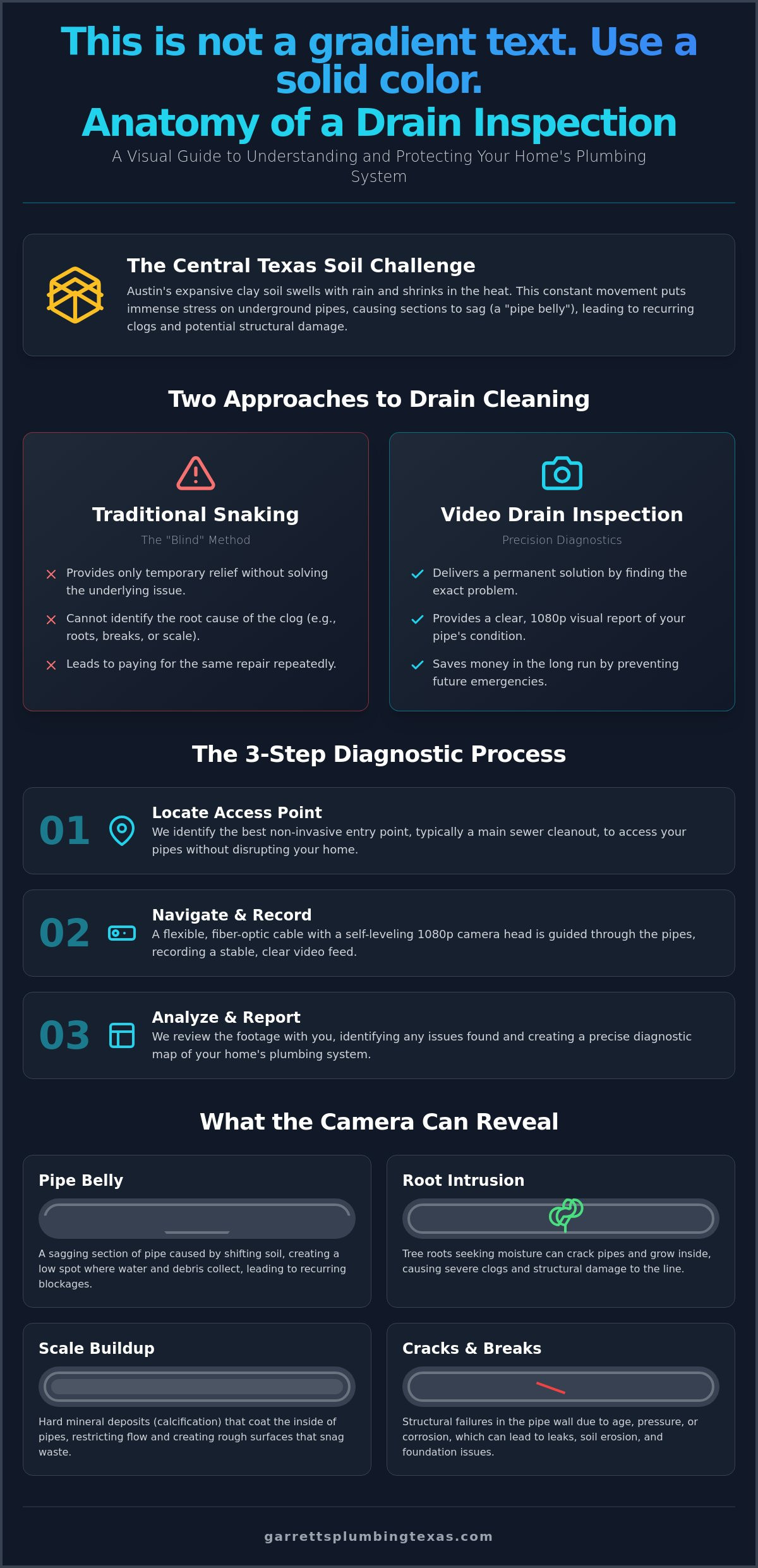
A professional drain inspection removes that uncertainty by providing a clear, high-resolution look at exactly what's happening inside your pipes. This diagnostic roadmap uses 1080p imaging technology to reveal root intrusions, mineral scale, or structural breaks that stay hidden from the naked eye. You'll learn exactly how these video inspections work and how to use the results to prevent costly sewer disasters. We'll walk you through the process of obtaining an honest diagnostic report, helping you protect your foundation and gain peace of mind about your home's most vital systems.
Table of Contents
What is a Video Drain Inspection and Why Does Your Austin Home Need One?
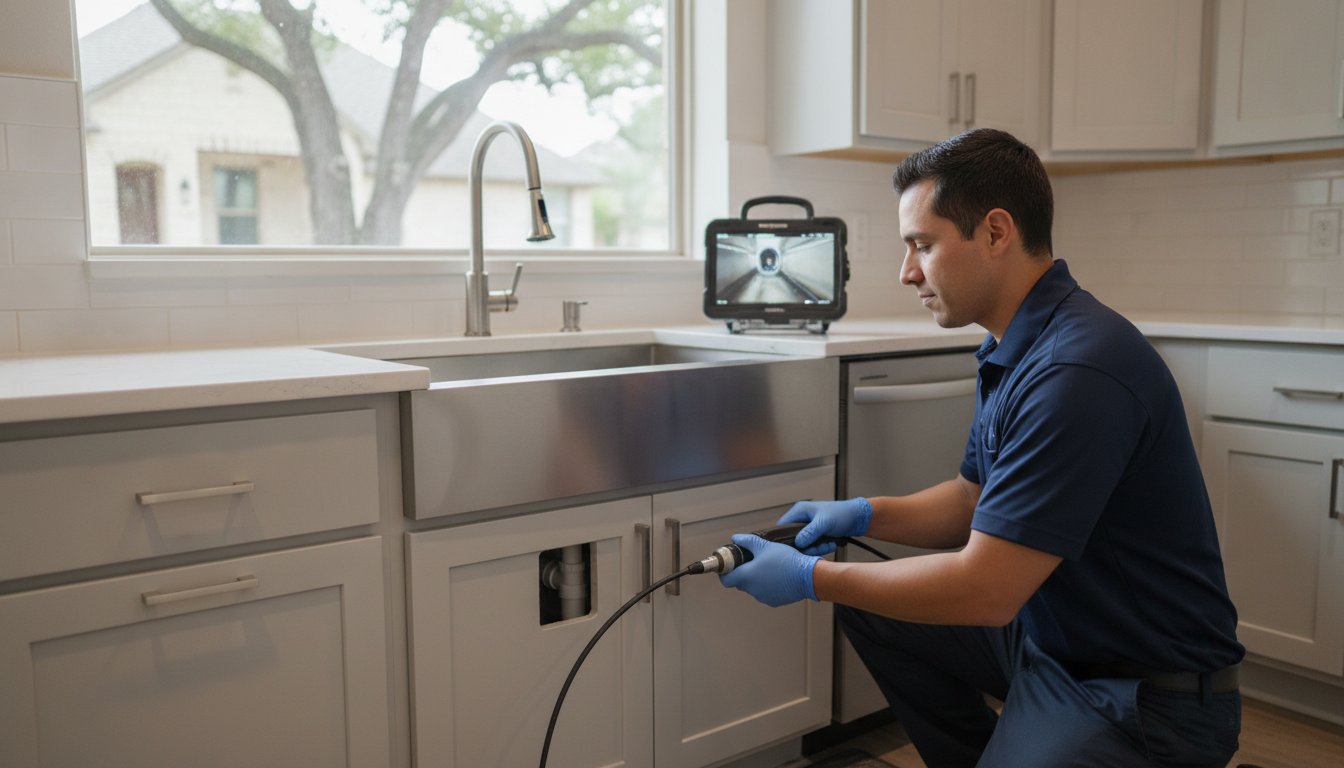
A professional drain inspection is a non-invasive diagnostic procedure that uses high-resolution, waterproof cameras to explore the internal condition of your plumbing. Instead of guessing where a blockage might be, we use CCTV drain cameras to see the exact state of your pipes. This approach reflects our "Master Craftsman" philosophy. We believe in seeing the problem clearly before touching a single wrench. It’s about moving from guesswork to precision diagnostics, ensuring that every repair we perform is necessary and effective.
In Central Texas, this level of detail is more than just a convenience. It is a vital tool for protecting your property. A comprehensive sewer system inspection can reveal issues that might eventually lead to foundation failure or significant water damage. By identifying cracks, clogs, or structural shifts early, you can address plumbing needs before they become emergencies.
The Impact of Austin’s Shifting Soil on Your Drains
Austin is famous for its Blackland Prairie clay soil. This material is highly expansive. It swells when it rains and shrinks during our long, dry summers. This constant movement places incredible stress on underground PVC and cast iron pipes. One common result is a "pipe belly." This occurs when the shifting soil causes a section of the pipe to sag, creating a low spot where debris collects and causes recurring clogs. These bellies often go undetected without a visual camera feed.
If your home is located in Georgetown or Round Rock, you may face different challenges. These areas often sit on limestone shelves. While limestone provides a more stable base than clay, it can lead to shallower plumbing lines that are more vulnerable to surface pressure and temperature fluctuations. A drain inspection helps us understand which geological factors are affecting your specific property, allowing us to provide a tailored solution that lasts.
Video Inspection vs. Traditional Snaking
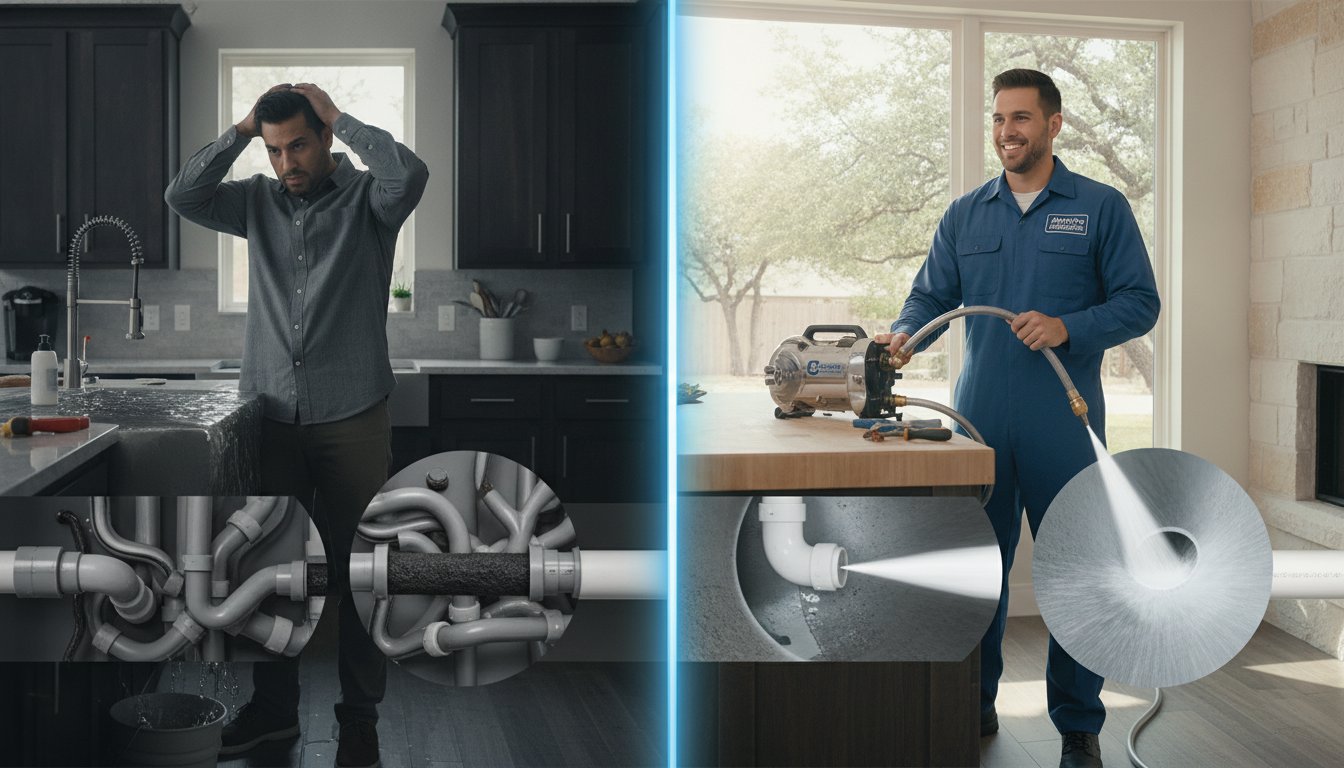
Traditional drain snaking is often a "blind" process. A technician feeds a cable into the line to break up a clog without ever seeing what caused it. While this might provide temporary relief, it doesn't solve the underlying issue. A camera inspection is different. It allows us to see if the problem is a simple grease buildup, a broken pipe, or invasive tree roots. We don't believe in temporary fixes when a permanent solution is possible.
We believe a professional drain cleaning in Austin should always begin with a visual assessment. This prevents you from paying to clear the same clog repeatedly. Investing in a clear diagnostic report saves money in the long run by identifying the root cause of your plumbing frustrations. It is the honest, reliable way to maintain a healthy home and avoid the stress of unexpected sewer failures.
How the Video Drain Inspection Process Works: A Step-by-Step Guide
A professional drain inspection is a methodical process that requires both high-tech equipment and the steady hand of a seasoned expert. It isn't as simple as just dropping a camera into a hole. We follow a specific sequence to ensure we see every inch of your plumbing system without causing any disruption to your daily life. This careful approach allows us to gather the facts before we ever suggest a repair plan.
The process moves from preparation to real-time monitoring. We use high-definition monitors to watch the camera's progress, looking for the smallest hairline cracks or signs of scale buildup. By the time we finish, we have a complete map of your underground pipes. This precision is what separates a Master Craftsman from someone who just clears clogs.
Step 1: Locating the Access Point
In most Austin homes, we look for a main sewer cleanout. This is typically a capped pipe located near your foundation or in the yard. If your home was built before these were standard, we don't just start digging. We can access the system through a roof vent or by temporarily removing a toilet. This methodical entry protects your home's interior and ensures we get the most accurate view of the main line's condition.
Step 2: Navigating the Line and Recording
We insert a flexible, fiber-optic cable equipped with a self-leveling camera head. This technology keeps the image upright as the camera navigates through 90-degree turns and bends. As the camera travels, we look for structural integrity issues. We follow rigorous standards for data interpretation, similar to the Pipeline Assessment and Certification Program (PACP), to ensure our findings are reliable. A sonde is the transmitter that allows plumbers to pinpoint pipe depth and location from above ground. This helps us find the exact spot of a break without unnecessary guesswork.
Step 3: Post-Inspection Reporting
The footage gathered during a drain inspection provides the foundation for an honest diagnostic report. You'll receive clear video files with timestamps and a detailed explanation of our findings. This digital record is invaluable for insurance claims or real estate negotiations. It also allows us to provide a transparent estimate for any necessary sewer repair. We believe you should have all the facts in hand before making a decision about your home's plumbing health.
Interpreting the Footage: Common Issues Found in Austin Pipes
When you look at the monitor during a drain inspection, the images might look like a foreign, underground landscape. We believe a homeowner should be able to "read" this footage alongside the technician. Healthy PVC piping should appear smooth and uniform in color, typically white or light grey. In contrast, older cast iron pipes often look like the inside of a rusted cave, with bumpy textures and dark discoloration. Understanding these visual cues helps you distinguish between a pipe that needs a simple cleaning and one that requires a full replacement.
Some findings are "red flags" that require immediate intervention, such as a total collapse or a massive blockage. Others are minor issues that we can simply monitor over time. These visual findings provide the necessary context for your repair decisions. While a camera shows us the interior condition, leak detection services help us verify if water is escaping into the soil. Together, these tools give us the complete, honest picture we need to protect your home's foundation.
Tree Root Intrusion: The Silent Pipe Destroyer
Austin's majestic Live Oaks and Pecan trees are beautiful, but their roots are relentless seekers of moisture. They can sense the condensation on a sewer line from several feet away. Once they find a tiny crack or an offset joint in an old clay pipe, they move in. Hairline roots are thin and wispy, often just needing a thorough cleaning to prevent future trouble. However, if left alone, they grow into dense "root balls" that can completely block the flow of waste and eventually shatter the pipe under the pressure of their growth.
Corrosion, Scale, and Build-up
For homes with original cast iron, we often look for "channeling." This occurs when the bottom of the pipe literally rusts away over decades, leaving a jagged trench where water should flow smoothly. Austin's hard water also contributes to mineral scale. This rough buildup acts like sandpaper, snagging toilet paper and debris until a stubborn clog forms. Grease logs are solidified masses of cooking fats and oils that cling to pipe walls and create impenetrable barriers in kitchen drain lines.
Structural Failures: Bellies and Offsets
When Should You Schedule a Drain Inspection?
Timing is everything when it's about protecting your home's infrastructure. Most homeowners wait until waste is backing up into their shower or kitchen sink before they call for help. By that point, you aren't just looking for a drain inspection; you're likely facing a full-blown crisis. We recommend a proactive approach that mirrors the Master Craftsman philosophy. Recognizing early warning signs can save you from the stress and expense of emergency plumbing in Austin. It’s about being a guardian of your home’s quality and catching minor issues before they turn into disasters.
Buying a Home: The Sewer Scope Contingency
In the fast-paced Austin real estate market, buyers often overlook what’s happening underground. A standard home inspection typically focuses on visible systems like the roof, HVAC, or electrical panel. It rarely covers the main sewer line. In established neighborhoods like Tarrytown or Hyde Park, those lines could be sixty years old and nearing the end of their functional life. In the Austin area, a sewer scope inspection typically costs between $150 and $250. This small investment can prevent you from inheriting a massive repair bill the week after you move in. We believe every buyer deserves an honest diagnostic report before they sign on the dotted line.
Recurring Clogs and Slow Drains
We follow the "Three Strike" rule. If you've had to clear the same drain three times in a single year, there's a deeper issue at play that a plunger won't fix. Chemical cleaners and simple snaking are often just temporary Band-Aids. Gurgling sounds in your toilet often mean the main line is struggling to breathe due to a partial blockage. If you notice persistent sewer smells inside your home, it indicates a breach in the drain-waste-vent system. These aren't just inconveniences; they are signals that your plumbing is failing from the inside out.
Visible Signs Outside the Home
Your yard often tells a story about the health of your pipes. If you see a random, lush green patch of grass during a dry Austin July, it’s likely being "watered" by a sewer leak. Shifting soil can also cause sinkholes or new cracks in your driveway and foundation. A professional drain inspection helps verify the integrity of your system, whether you have original lines or have already invested in PEX or PVC upgrades. If you’re noticing any of these warning signs, schedule a professional diagnostic session today to get the clear answers you need.
The Garrett’s Plumbing Approach: Honest Diagnostics for Four Generations
At Garrett’s Plumbing, we don't just see ourselves as service providers. We are guardians of quality for the Austin community. Our approach to a drain inspection is rooted in four generations of plumbing knowledge. This lineage isn't just about the past; it’s the foundation for our current excellence. We combine "old-school" reliability with the most advanced diagnostic tools available today. With over 27 years of experience specifically in Central Texas, we understand the unique challenges our local environment poses to your home’s infrastructure. We know how the soil moves and how the water behaves because we've been part of this community for decades.
Choosing the right team means choosing a partner who values your home as much as you do. We've invested in high-definition cameras and digital reporting systems because we believe you deserve the clearest possible picture of your plumbing health. We don't hide behind technical jargon or vague explanations. Instead, we position ourselves as your ethical guide. We show you the problem on the screen so you can make an informed choice based on facts, not fear. This transparency is the cornerstone of our "Master Craftsman" philosophy.
Why Austin Families Trust the Garrett and Ford Names
We believe in doing things the right way the first time. That standard starts with the person who arrives at your door. We send licensed plumbers, not just basic technicians, to perform every drain inspection. This ensures that the professional looking at your camera feed has the deep technical knowledge required to interpret complex data accurately. We treat every Austin home with the personal care of a neighbor. Our commitment to integrity means we only recommend repairs that are truly necessary to protect your property and your family’s well-being.
Clear Reports, No Pressure
Transparency is at the heart of our diagnostic process. We don't just tell you there's a problem; we walk you through the footage on-site so you can see it for yourself. After the inspection, you’ll receive a comprehensive digital report that includes video files and detailed findings. This collaborative approach allows you to understand the condition of your pipes without any high-pressure sales tactics. We provide transparent, project-based pricing for any necessary repairs, ensuring there are no surprises. Schedule your professional drain inspection with Garrett’s Plumbing today!
Secure Your Home’s Future with Precision Diagnostics
At Garrett’s Plumbing, we bring four generations of Austin plumbing heritage to every diagnostic session. As licensed and insured professionals with an A+ rated local service record since 1999, we prioritize honesty and craftsmanship over high-pressure sales. We believe in doing things the right way, ensuring your pipes are as stable as the community we've served for decades.
Book Your Video Drain Inspection with Garrett’s Plumbing today to gain peace of mind and protect your home for the years to come. We are here to help you navigate your plumbing needs with the steady hand of a trusted neighbor.
Frequently Asked Questions
How much does a drain inspection cost in Austin?
The cost for this service depends on several factors, including the age of your home and the accessibility of your cleanouts. Older properties in established neighborhoods might require more time to navigate complex clay or cast iron lines. While rates vary across Central Texas, investing in a professional diagnostic session is a cost-effective way to avoid the five-figure expenses associated with major sewer failures or foundation repairs.
Will a drain camera inspection damage my pipes?
No, a camera inspection is a completely non-invasive and safe procedure for your plumbing system. The fiber-optic cables we use are designed to be flexible and smooth, allowing them to glide through your pipes without causing any structural harm. This technology allows us to be a guardian of your home's quality, identifying issues without the need for aggressive or destructive methods.
How long does a typical video pipe inspection take?
A standard drain inspection usually takes between 30 and 90 minutes to complete. The timeframe depends on the length of the sewer line and how easily we can access the system through a cleanout or roof vent. If we encounter heavy root intrusion or significant debris, it may take a little longer to ensure we get a clear, high-definition view of the entire line.
Can a drain inspection find a slab leak?
Yes, a video inspection is one of the most effective tools for pinpointing the source of a slab leak. It allows us to see exactly where a pipe has cracked, shifted, or separated beneath your foundation. By identifying the precise location of the breach, we can provide a more accurate repair plan and avoid unnecessary damage to your home’s flooring or concrete slab.
Do I need to be home for the plumber to do the inspection?
We highly recommend that homeowners are present during the process. This allows us to walk you through the live footage in real-time and explain our findings as we see them. Seeing the condition of your pipes firsthand helps you make informed decisions about your home. If you can't be there, we provide a detailed digital report with video files so you still have all the facts.
What is the difference between a sewer scope and a drain inspection?
These terms are often used interchangeably in the plumbing industry. A sewer scope typically refers specifically to inspecting the main lateral line that runs from your home to the city’s sewer tap. A drain inspection can cover that same main line or focus on smaller secondary lines inside the home. Both use the same high-resolution camera technology to provide an honest diagnostic look at your pipes.
Can you find tree roots in a PVC pipe with a camera?
Yes, our high-definition cameras can easily spot tree roots inside PVC piping. While PVC is more durable than older materials, Austin's shifting clay soil can cause joints to loosen or pipes to crack over time. Thirsty roots from Live Oaks or Pecan trees will find even the smallest opening to enter the line. We can see these intrusions clearly and determine if they are minor or a major blockage.
Will insurance cover the cost of a drain inspection?
Coverage depends on your specific homeowners insurance policy and the nature of the plumbing issue. Many policies will cover the cost of diagnostics if the inspection is part of a claim for sudden and accidental water damage. However, preventative inspections or those for wear and tear are typically an out-of-pocket expense. It’s always a good idea to check with your agent about your specific coverage details.

Comments