The Homeowner’s Checklist for Identifying and Managing a Plumbing Stoppage

Updated: Jul 11
Imagine the frustration of finishing a load of laundry only to discover grey water bubbling up through your guest shower drain. It's a moment that stops you in your tracks, sparking an immediate fear of raw sewage backing up into your living space. Most homeowners have dealt with a slow sink, but a true plumbing stoppage is a different beast entirely. It isn't just a stubborn clog; it's often a sign of a systemic failure that can lead to expensive foundation repairs if it isn't handled with precision and care.
We understand how unsettling it is when your home's most essential systems start to fail. You shouldn't have to guess whether you're facing a simple DIY fix or a major emergency. This article will teach you how to distinguish a minor clog from a deep-seated plumbing stoppage and provide the exact steps you need to take to protect your home's foundation and pipes. We will explore the unique challenges of Central Texas plumbing, from expansive clay soil to aging pipe materials, and provide a clear checklist to help you act with confidence when every second counts.
Table of Contents
Understanding the Plumbing Stoppage: Clog vs. Systemic Obstruction
To the untrained eye, a slow drain is just a minor annoyance. However, a master craftsman looks at the plumbing system as a living, interconnected network. A plumbing stoppage is far more than a bit of hair caught in a shower trap. It represents a significant obstruction in the main artery of your home. Understanding this distinction is the first step toward protecting your property and making informed decisions about the necessary repairs. When you treat the whole system with respect, you avoid the trap of temporary fixes that lead to recurring headaches.
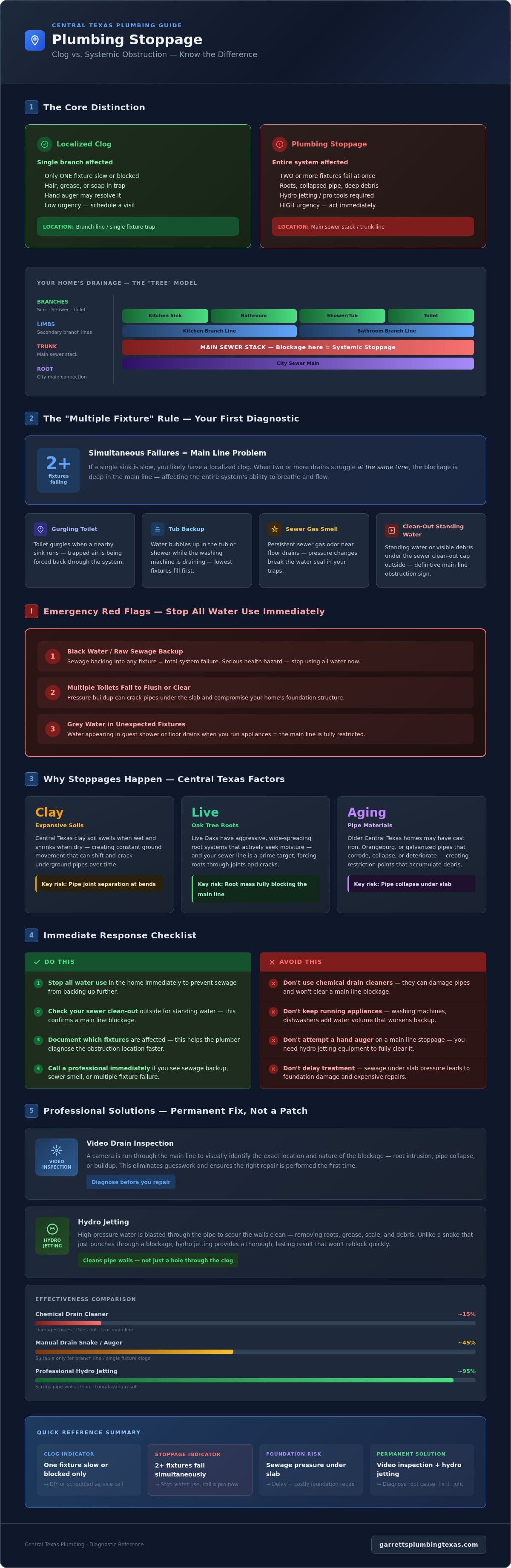
Think of your home’s drainage system like a tree. Each sink, shower, and toilet represents a small branch. These branches feed into larger limbs, which eventually connect to the main trunk, known as the sewer stack. This trunk carries all waste away from your home and into the city main. A localized clog happens in a single branch, affecting only one fixture. A true plumbing stoppage occurs in the trunk, effectively shutting down the entire network and putting your home's foundation at risk.
The Anatomy of Your Home's Drainage System
The main sewer stack is the vertical heart of your home's plumbing. It collects waste from secondary branch lines and directs it toward the city’s sewer system. Understanding plumbing drain basics helps homeowners see that these pipes rely on gravity and precise angles to function properly. When the main stack is blocked, the waste has nowhere to go but back up into the lowest fixtures in your house. Secondary branch lines in the kitchen and bathroom are designed for smaller volumes, but they all eventually rely on that one main path to stay clear.
Why Terminology Matters for Your Repair
Precision in language leads to precision in repair. A plumbing stoppage is a systemic blockage that affects multiple fixtures simultaneously. Identifying this early saves you from the frustration of paying for a simple snake service when the situation requires more robust tools. While a hand auger might clear a bathroom sink, a main line obstruction often demands professional hydro jetting to scrub the pipe walls clean. Our multi-generational experience has taught us that diagnosing the root cause, rather than just treating the symptom, is the only ethical way to ensure your home remains stable for years to come. Using the right term ensures the plumber arrives with the heavy duty equipment needed to solve the problem for good.
The Homeowner’s Diagnostic Checklist: Is It a Stoppage?
You don't need a master’s license to identify a serious drainage issue. Often, your home communicates the problem through subtle sounds and sights long before a total backup occurs. The most reliable indicator is the 'Multiple Fixture' Rule. If a single sink is slow, you likely have a localized clog. However, when two or more drains across the house struggle simultaneously, you are dealing with a plumbing stoppage. This indicates the blockage is deep in the main line, affecting the entire system's ability to breathe and flow.
Keep a close eye on the lowest points in your home. Showers and bathtubs often act as the first warning signs. If you notice water bubbling up in the tub while the washing machine is in its drain cycle, the main line is restricted. You should also listen for a distinct gurgling sound coming from the toilet when a nearby sink is running. This happens because air is being trapped and forced back through the traps. If these signs appear, it is wise to step outside and check your sewer clean-out. Standing water or visible debris under the clean-out cap is a definitive sign of a main line obstruction.
The 'Master Craftsman' Diagnostic Test
We often use a simple 'flush test' to confirm our suspicions. While modern high-efficiency fixtures are designed to meet strict standards for EPA on toilet performance, they still rely on a clear path downstream. Flush the toilet and watch the nearest bathtub drain. If the water level in the tub rises or you hear air escaping, the 'trunk' of your plumbing tree is blocked. Trust your senses, too. A persistent smell of sewer gas near floor drains or in the basement suggests that the water seal in your traps is being broken by pressure changes in the system.
When the Checklist Points to an Emergency
Some situations require more than a scheduled visit. If you see 'black water' or raw sewage backing up into your fixtures, stop using all water immediately. This is a significant health risk and a sign of a total system failure. When multiple toilets in the home fail to flush or clear, the pressure on your pipes can lead to leaks under your slab. This pressure can eventually compromise your foundation. If your diagnostic checklist shows these red flags, seeking emergency plumbing services is the best way to protect your property from long-term structural damage.
Why Stoppages Happen: The Central Texas Perspective
While homeowners across the country face drain issues, those of us in Austin and Round Rock deal with a unique set of geological and environmental stressors. A plumbing stoppage in a Central Texas home is frequently the result of the very earth beneath our feet. Our region is famous for its expansive clay soil, which acts like a sponge. It swells significantly during our heavy rain seasons and shrinks during the brutal summer droughts. This constant movement puts immense pressure on underground pipes, leading to structural failures that a simple plunger can't fix.
Beyond the soil, our household habits and the age of our infrastructure play a major role. In many of our older, established neighborhoods, deteriorating cast iron pipes are reaching the end of their lifespan. These pipes corrode internally, creating a jagged, "scaled" surface that catches everything passing through. When you add modern culprits like "flushable" wipes and FOG (fats, oils, and grease), you create a recipe for disaster. Despite the marketing, wipes do not dissolve. Instead, they snag on pipe imperfections and grease, forming a solid mass that eventually chokes the entire system.
Environmental Factors in Austin and Round Rock
The shifting clay in our area often causes "bellies" in the sewer line. A belly is a sag where the pipe has lost its proper slope due to soil contraction. Gravity no longer does the work, so waste settles in the low spot and hardens over time. In extreme cases, the soil movement is so violent it leads to pipe shearing. This is a clean break where the line actually shifts out of alignment. Because most homes in our region are built on concrete slabs, these main line issues occur directly beneath your foundation, making early detection vital to prevent structural settling.
The Hidden Enemy: Tree Root Intrusion
Local tree species like Live Oaks and Pecans are master survivors. During dry spells, their root systems become incredibly aggressive in their search for moisture. They can sense the condensation on a sewer line and will find even the most microscopic crack or joint to enter. What begins as a tiny filament quickly grows into a thick, woody mass that acts as a filter, catching toilet paper and debris. A professional sewer system inspection is the best way to catch these roots before they cause a total plumbing stoppage. Catching root intrusion early can often save you from the high cost of a full pipe replacement.
Immediate Response Checklist: What to Do (and Not Do)
Next, take a moment to document exactly what is happening. Note which fixtures are affected and whether you hear gurgling in the walls. This information is invaluable to a master craftsman during the diagnostic phase. If the backup is continuous or worsening even with the water off, locate your main water shut-off valve and turn it to the 'off' position. Finally, step outside and clear the area around your main sewer clean-out. Removing brush, mulch, or lawn ornaments from this access point allows your plumber to begin work the moment they arrive on your property.
The Danger of Store-Bought Chemicals
It's tempting to reach for a bottle of liquid drain cleaner, but we strongly advise against it. These products are designed for minor hair clogs in a sink trap, not a systemic plumbing stoppage. When a main line is blocked, these caustic acids sit in your pipes with nowhere to go. They can rapidly corrode older cast iron or even warp modern PVC over time. Perhaps more importantly, they create a significant safety hazard for the professional who eventually has to clear the line. A plumber shouldn't have to worry about chemical burns while trying to restore your home's health.
Preparing for the Professional Arrival
Efficiency is key when your home is in distress. Ensure there is a clear path to your crawl space or attic if your plumbing is accessed through those areas. Secure your pets in a separate room so the team can move freely between their service vehicle and your home without distraction. If you're currently standing in water or the situation is escalating, consult our guide on emergency plumbing in Austin for immediate support. Taking these small steps ensures the focus remains entirely on solving your problem the right way. If you need a steady hand to guide you through this process, contact Garrett's Plumbing to schedule a professional evaluation.
Professional Solutions: How We Clear the Path
Resolving a plumbing stoppage requires a blend of traditional skill and modern technology. While a homeowner might reach for a plunger or a hand auger, a master craftsman uses tools designed to clear the path permanently. We often begin with mechanical snaking to break through the tough obstructions we discussed earlier, such as aggressive tree roots or solid debris. This heavy duty equipment is essential for restoring immediate flow, but it is often just the first step in a comprehensive repair strategy that protects your home’s long term health.
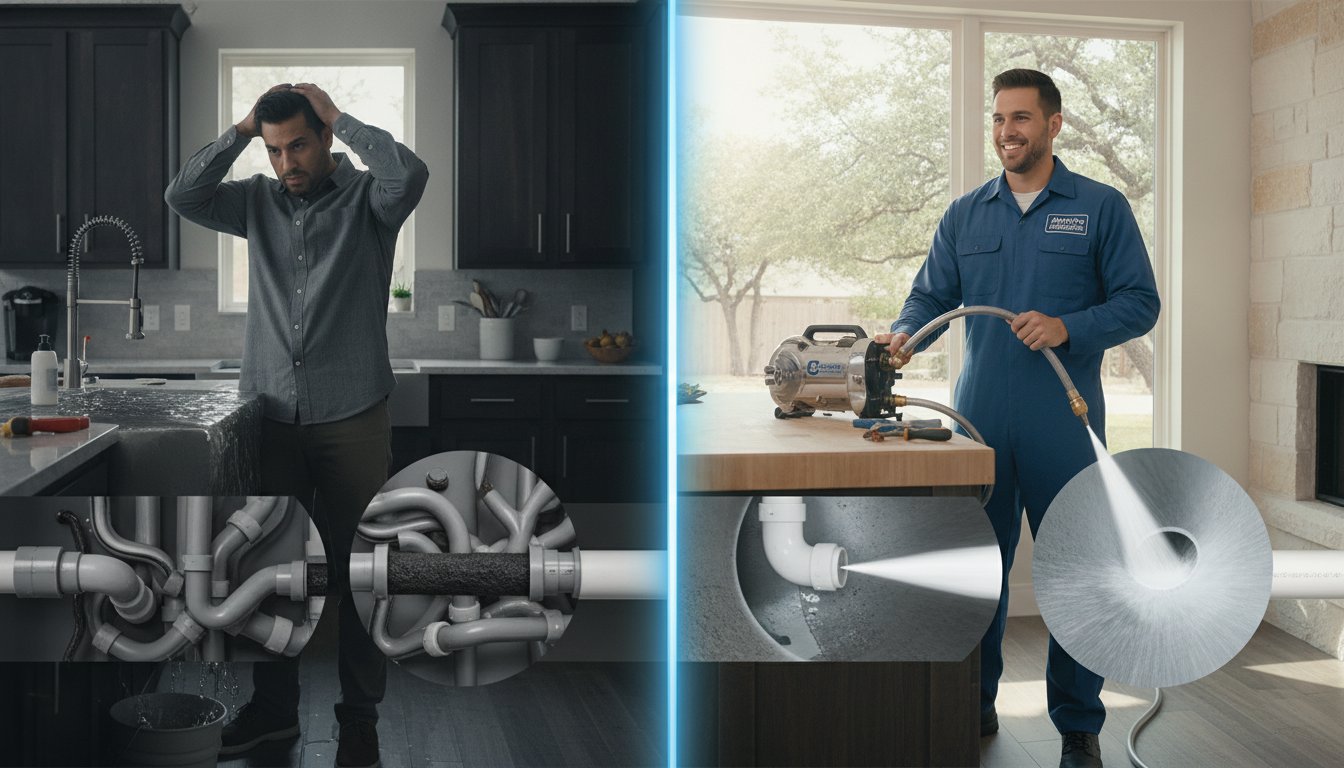
For pipes that have suffered from years of grease accumulation or mineral scaling, we recommend hydro jetting. This process uses high pressure water to scrub the interior walls of your pipes until they are nearly like new. It doesn't just poke a hole through the blockage; it removes the residue that causes future clogs to form. This methodical approach is part of our commitment to doing things the right way the first time. We value the stability of your plumbing system and prefer solutions that prevent recurring service calls.
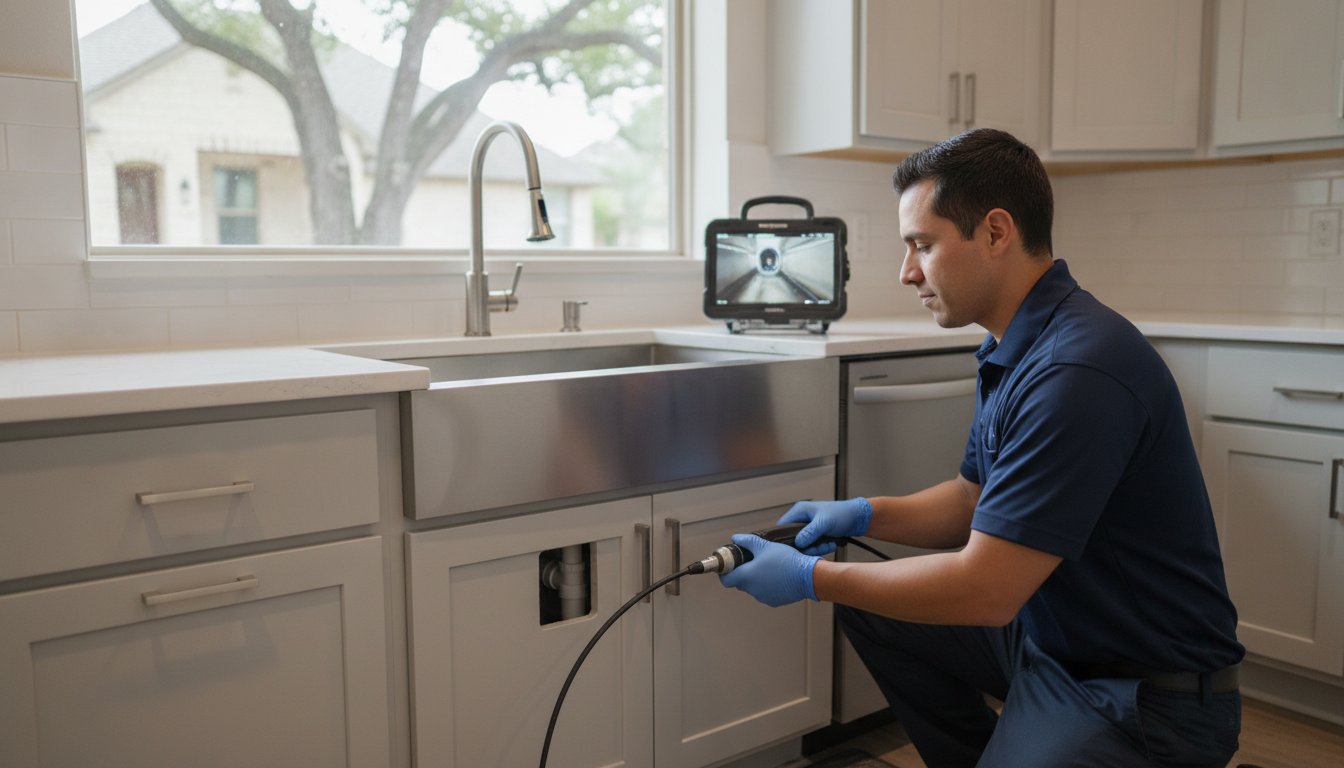
Advanced Diagnostics with Camera Inspections
Long-Term Prevention and Maintenance
The best way to manage a plumbing emergency is to prevent it from ever happening. In the shifting soils of Central Texas, your pipes are under constant stress. Regular drain cleaning in Austin is significantly more affordable than the cost of repairing a foundation damaged by a major backup. We suggest annual sewer line check-ups for older Texas homes to catch small issues before they escalate into systemic failures that threaten your property's value.
At Garrett's Plumbing, our promise is rooted in over 27 years of integrity and old school reliability. We are a family owned business that takes pride in our heritage and the human element of our work. When you call our team, you are getting four generations of collective experience and a professional who treats your home with the same respect we show our own. Trust the master craftsmen at Garrett's Plumbing to clear your stoppage for good and provide the peace of mind your family deserves.
Restoring Your Home's Flow and Peace of Mind
Managing a plumbing stoppage is about more than just clearing a slow drain; it's about protecting the structural integrity and longevity of your greatest investment. By applying the "Multiple Fixture Rule" and recognizing the unique environmental pressures of Central Texas, you can act with the confidence of a seasoned homeowner. Remember to stop all water usage at the first sign of a systemic backup and avoid the temptation of harsh chemicals that can damage your pipes over time. Taking these methodical steps ensures that a temporary obstruction doesn't turn into a permanent foundation issue.
When you need a steady hand to guide you through a complex repair, trust the four generations of plumbing heritage at Garrett's Plumbing. We've spent 27+ years serving Austin and surrounding areas with a commitment to integrity and master craftsmanship. Our licensed and insured master plumbers use advanced diagnostics to find the root of the problem and provide a lasting solution. Schedule Your Professional Drain Inspection with Garrett's Plumbing today to ensure your system remains clear for years to come. We look forward to being your trusted partner in maintaining a healthy, stable home.
Frequently Asked Questions
What is the difference between a clog and a stoppage?
A localized clog affects only a single fixture, while a plumbing stoppage is a systemic blockage in the main sewer line. Think of a clog as a traffic jam on a side street and a stoppage as a total closure of the main highway. When the main line is obstructed, every fixture in your home is affected because they all share a common exit point. Professional intervention is required to restore flow to the entire system.
Is a plumbing stoppage covered by home insurance in Texas?
Coverage for a systemic backup typically depends on the specific language in your policy and the cause of the obstruction. Standard Texas homeowners insurance often requires a specific "Sewer Backup and Sump Pump Overflow" rider to cover water damage from a main line failure. We recommend reviewing your policy with your agent to ensure you have protection against sudden and accidental discharge rather than just gradual wear and tear.
Can I use a plunger to fix a main line stoppage?
No, a plunger is not an effective tool for clearing a main line plumbing stoppage. Plungers work by creating a small burst of pressure to dislodge items near the fixture's trap, such as a sink or toilet. Because a systemic obstruction is located deep underground in the main sewer stack, the pressure from a plunger dissipates long before it reaches the actual blockage. You will need professional mechanical equipment to reach these deep obstructions.
How much does it cost to clear a plumbing stoppage in Austin?
The investment required to resolve a drainage issue in Austin varies based on the severity of the blockage and the diagnostic tools required. Factors such as the accessibility of the clean-out, the presence of tree roots, and whether hydro jetting is necessary will influence the final total. We provide a clear, professional assessment after performing a thorough site evaluation to ensure you receive an honest estimate for the work required to protect your home.
What are the first signs of a sewer line stoppage?
The earliest indicators include multiple slow-draining fixtures and unusual sounds from your plumbing. You might notice that your toilets are slow to clear or hear a distinct gurgling sound in the tub when you use the bathroom sink. Persistent sewage odors near floor drains or standing water at your exterior sewer clean-out are also definitive red flags. These signs suggest that the main path for waste is becoming restricted.
Can tree roots really grow through solid plumbing pipes?
Yes, tree roots are incredibly persistent and can penetrate even small cracks or loose joints in your plumbing pipes. Once a microscopic root filament enters the pipe to reach the moisture inside, it expands and thickens over time. This growth can eventually shatter older clay or cast iron pipes. It creates a dense, woody mass that catches debris and leads to a total system failure that requires professional removal.
How long does a professional drain cleaning typically take?
A professional drain cleaning service typically takes between one and three hours to complete. This timeframe allows our team to perform a proper diagnostic check, set up the necessary equipment, and thoroughly clear the line. If a more complex obstruction requires a video camera inspection or hydro jetting to remove heavy scaling or roots, the process may take slightly longer. We prioritize a thorough, methodical approach over a rushed, temporary fix.
Why does my toilet gurgle when I run the shower?
Your toilet gurgles because air is trapped in the drainage system and is seeking the easiest path of escape. When you run the shower, the water entering the pipes displaces air. If the main sewer line is blocked, that air cannot move downstream and is instead forced back up through the water trap in your toilet. This sound is a classic warning that your home's plumbing is struggling to breathe due to a systemic obstruction.

Comments