Plumber for Clogged Pipes: Comparing Solutions for Your Home’s Drains

Updated: Jul 12
That bottle of liquid drain cleaner under your sink might actually be the biggest threat to your home’s aging plumbing. While these chemicals promise a quick fix, they often eat away at your pipes long before they dissolve a stubborn blockage. If you're dealing with a recurring clog that a plunger simply won't fix, it's time to consult a professional plumber for clogged pipes. We know the stress that comes with a slow drain, especially when you fear a costly sewer line replacement is lurking behind the wall.
You deserve the peace of mind that comes with a free-flowing drainage system and a job done the right way. This guide will help you discover the most effective professional methods to clear blockages and how to choose the right solution for your home’s unique needs. We'll provide a clear comparison between traditional snaking and modern hydro-jetting technology. From understanding Austin's specific soil challenges to finding a reliable local expert, you'll gain the knowledge needed to restore your home’s plumbing with confidence and stability.
Table of Contents
Understanding Why Pipes Clog: The Central Texas Perspective
A clogged pipe is rarely just a localized nuisance. It is often a clear signal that something is changing within your home’s wider plumbing infrastructure. While hair, grease, and soap scum are the usual suspects found in any household, Central Texas homeowners face environmental factors that go beyond what you will find in a standard plumbing manual. Our 27 years of experience in the Austin area has shown us that local conditions dictate how and why your drains fail.
Daily contributors like hair and cooking fats create the initial "sticky" surface that catches other debris. However, our region's hard water adds a layer of difficulty. Over time, calcium and magnesium deposits build up inside your pipes, narrowing the diameter and making it easier for even small amounts of waste to snag. This constriction is why many people reach for chemical drain cleaners, though those solutions rarely address the underlying mineral scale. When these common culprits combine with the unique geography of the Hill Country, you need a professional plumber for clogged pipes who understands the local terrain.
The Role of Shifting Soil in Austin Clogs
Our local "black gumbo" clay soil is notorious for its dramatic expansion and contraction during Austin’s extreme weather cycles. As the ground moves, it puts immense pressure on underground lines. This movement often results in "bellies," which are low spots in the pipe where water and waste pool instead of flowing toward the sewer. In Round Rock, this constant soil movement is the primary cause of recurring clogs that require a professional plumber for clogged pipes to diagnose. These offsets and bellies trap solid waste, creating a cycle of backups that a simple plunger cannot resolve.
Tree Root Intrusion in Older Neighborhoods
In established Austin neighborhoods, mature trees are a point of pride, but their root systems are relentless. During our frequent dry spells, roots seek out the moisture and nutrients found inside your sewer lines. Small cracks or joint gaps provide enough entry for hair-like roots to infiltrate the system. Once inside, they thrive on the steady supply of water and nutrients.
There is a significant difference between a "soft" clog, which is a temporary buildup of debris, and a "structural" root blockage. A structural blockage occurs when the roots grow thick enough to actually break or collapse the pipe. Watch for gurgling toilets or multiple drains backing up at once. These are clear warning signs that roots have compromised your main sewer line and require an expert touch to clear without causing further damage.
Professional Drain Cleaning vs. Drain Clearing
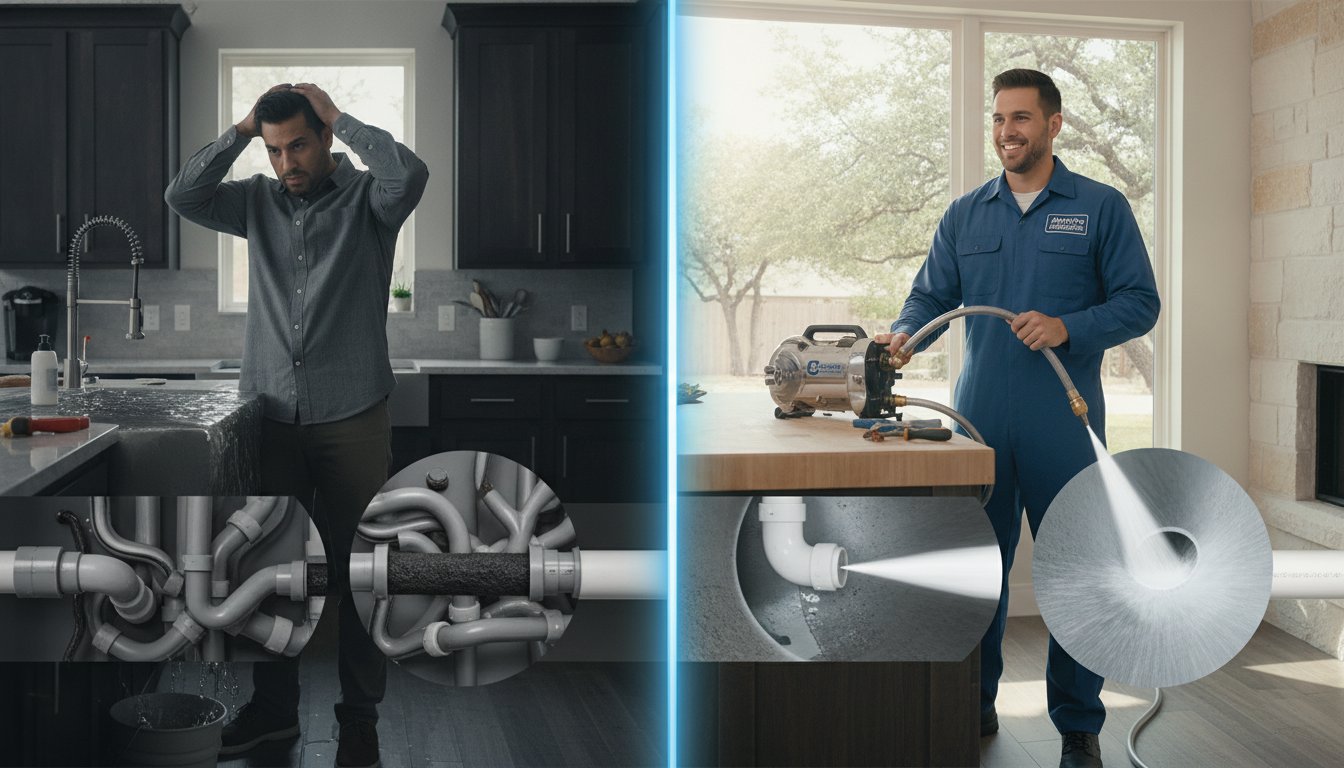
Most homeowners assume a drain is fixed as soon as the water starts moving again. This is a common misconception that often leads to repeated service calls. When you hire a plumber for clogged pipes, it's vital to understand the difference between clearing a line and truly cleaning it. Drain clearing is a temporary measure. It involves using a tool to puncture a small hole through a blockage to restore flow. While the water disappears for now, the bulk of the debris remains attached to the pipe walls. This is why "cheap" clearing services often result in a callback within 30 days. The remaining residue quickly catches more waste, and the cycle begins again.
Professional drain cleaning is a more methodical approach that focuses on scouring the pipe walls to restore the original diameter of the line. It's the difference between poking a hole in a clogged straw and washing the straw until it's like new. To accurately determine which method your home needs, a professional sewer system inspection is often the best first step. This allows us to see exactly what is happening inside your pipes, ensuring we apply the right solution for your specific situation without guesswork.
Mechanical Snaking (The Drain Auger)
The professional-grade snake, or drain auger, is a foundational tool for any plumber for clogged pipes. It uses a flexible metal cable with a specialized tip to physically break up solid obstructions. This method is highly effective for localized clogs, such as hair tangles in a bathroom sink or paper blockages in a toilet. However, snaking has its limitations. It's excellent for "soft" clogs, but it cannot effectively remove sludge or heavy buildup. It often leaves behind a layer of grime that can lead to future issues.
Hydro-Jetting: The Modern Standard
For a comprehensive and long-lasting solution, hydro-jetting has become the modern industry standard. This technique utilizes high-pressure water scouring at levels up to 4000 PSI to blast away years of stubborn residue. It is the only reliable method to completely remove Fats, oils, and grease (FOG) that have solidified inside your plumbing. Hydro-jetting essentially flushes the entire system clean, restoring it to a like-new state. While it's incredibly effective, it requires the steady hand of a master craftsman. We always assess the integrity of older clay or cast iron pipes before proceeding to ensure the pressure is safe for your specific plumbing material. If you're tired of temporary fixes, consider a professional drain cleaning to restore your home's peace of mind.
Clogs by Location: Tailoring the Solution
Every room in your Austin home presents a unique plumbing environment. A slow drain in the guest bathroom requires a different strategy than a backup in the kitchen. Understanding these nuances is why you need an experienced plumber for clogged pipes. Managing a plumbing stoppage varies significantly based on pipe size and location. A 1.5-inch sink drain is a far more delicate system than the 4-inch main sewer line that carries waste away from your property. Our team approaches each issue by first identifying the scope of the problem to ensure the solution is both effective and safe for your specific pipes.
When multiple fixtures begin to act up simultaneously, the complexity of the job increases. In Austin homes, we often see multi-fixture backups that indicate a deeper systemic issue. Rather than treating each drain as an isolated incident, we look at the house as a single, interconnected system. This bird's-eye view allows us to determine if the blockage is a simple fixture stoppage or a more serious main line backup that could threaten your home's foundation or health.
Kitchen Sink and Garbage Disposal Stoppages
The kitchen is the heart of the home, but it's also where "FOG" (Fats, Oils, and Grease) causes the most trouble. These substances enter the drain as liquids but solidify as they cool, coating the interior of your pipes. Often, a request for kitchen faucet repair Austin reveals deeper pipe issues caused by years of buildup. Your garbage disposal is not a trash can. Starchy foods like potato peels and fibrous vegetables like celery create a thick paste that can easily overwhelm a small kitchen line. We use specialized tools to clear these stubborn obstructions without damaging your disposal or under-sink plumbing.
Main Sewer Line Blockages
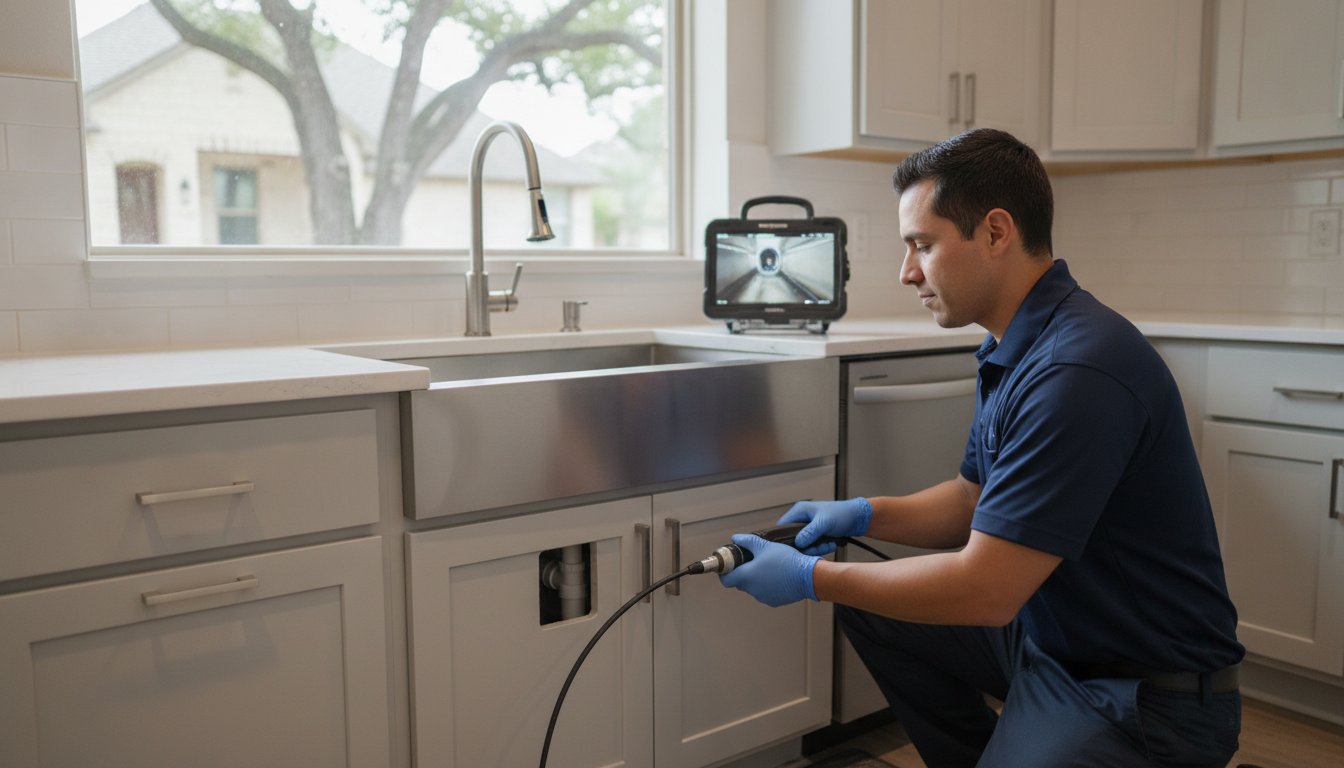
When every drain in the house is slow or gurgling, the problem likely lies in the main sewer line. This is a "whole house" backup, and it is the most complex type of stoppage we encounter. Identifying the exact location of the blockage is critical. We use high-definition video camera inspections to see deep into the line, identifying whether the issue is a simple clog or something more structural. Main lines require much heavier equipment than a standard hand-snake. A professional plumber for clogged pipes must use heavy-duty industrial augers or hydro-jetters to clear a 100-foot run of 4-inch pipe. This methodical approach ensures we solve the problem at the source rather than just providing a temporary fix.
The Hidden Dangers of DIY Chemical Cleaners
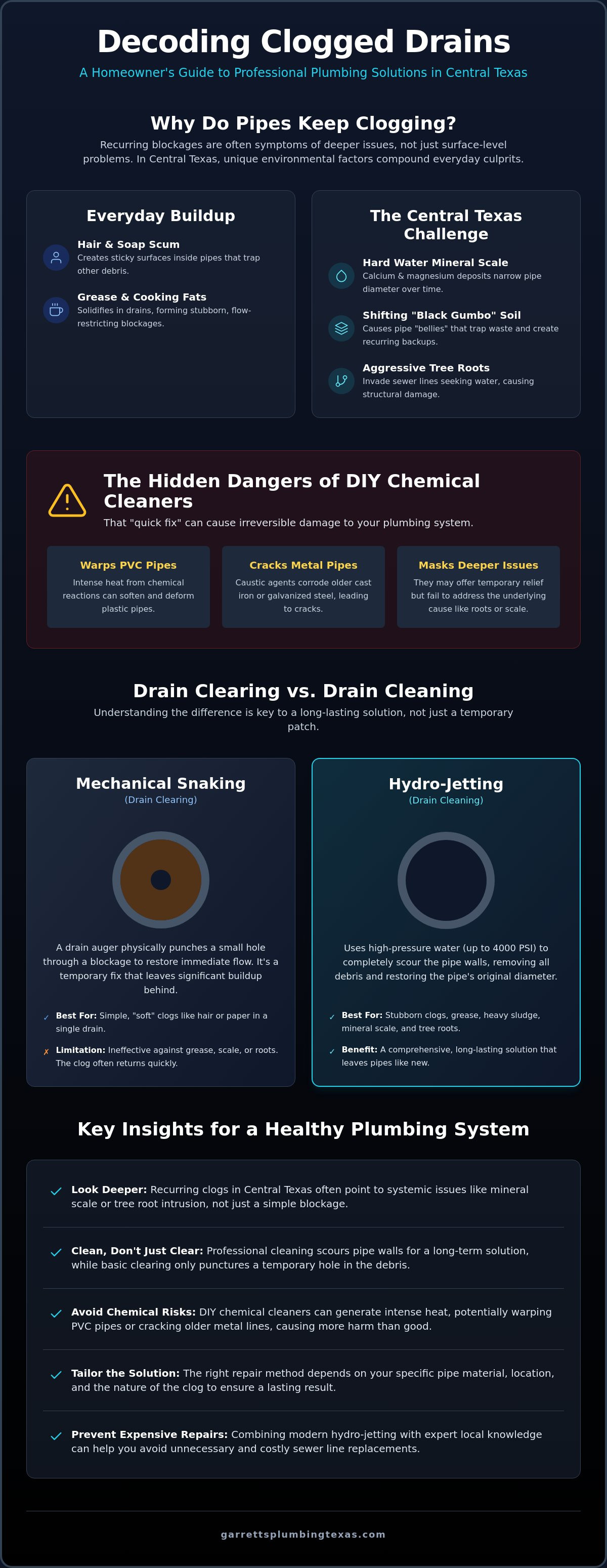
It's incredibly tempting to reach for a bottle of grocery store "liquid plumber" when your sink starts backing up. These products promise a quick, inexpensive fix, but they often create far more problems than they solve. Most chemical cleaners work through an exothermic reaction, which means they generate intense heat to melt through obstructions. This heat is often high enough to warp modern PVC pipes or cause older, brittle cast iron to crack under the thermal stress. Instead of a clear drain, you might end up with a hidden leak behind your walls.
Beyond the structural risks, these chemicals create a "clog-trap" cycle. Because they rarely dissolve the entire blockage, they leave behind a sticky, caustic residue. This residue acts like an adhesive, catching new hair, soap scum, and grease even faster than before. If the chemical fails to clear the line entirely, you're left with a sink full of standing poison. This creates a significant safety hazard for the professional plumber for clogged pipes who arrives to fix the issue, as they must now contend with skin and eye irritants while working on your drains.
Corrosion and Pipe Damage
The harsh ingredients in these cleaners, such as sulfuric acid or lye, are designed to be aggressive. While they may eventually eat through a hair clog, they're also eating away at your cast iron and copper pipes. In many of Austin’s newer builds, PEX piping is the standard. While PEX is highly resistant to many things, the extreme temperatures generated by chemical reactions can weaken the material and compromise its longevity. It is a simple reality that chemical cleaners often only dissolve a small portion of the clog, leaving the root cause of the stoppage completely unaddressed.
Environmental and Health Impacts
We also consider the wider impact on our community. Harsh chemicals poured down the drain eventually reach local Austin water treatment systems, which aren't always equipped to neutralize large quantities of these acids. Inside the home, the fumes can linger in small bathrooms, posing a risk to children and pets. Many homeowners try the "baking soda and vinegar" method as a natural alternative. While this is much safer, it's largely a myth in terms of real-world effectiveness. It creates a fizzy reaction but lacks the mechanical force needed to move a physical obstruction. If you want to protect your home’s infrastructure, it's best to skip the chemicals and schedule a professional drain cleaning with a team that values the integrity of your pipes.
Why Choose Garrett’s Plumbing for Clogged Pipes in Austin
Choosing a plumber for clogged pipes involves more than just finding someone with a set of tools. It requires trusting a legacy of craftsmanship and ethical standards. At Garrett’s Plumbing, we bring four generations of trade experience to every job site. This heritage means we don't just see a drain; we see a home’s vital infrastructure that deserves respect. Serving the Austin area for over 27 years has taught us that every neighborhood has its own plumbing "personality," from the older cast iron lines in central neighborhoods to the modern PEX systems in newer developments.
Our Professional Drain Cleaning Process
We follow a methodical, three-step approach to restore your home’s flow. This deliberate pace ensures nothing is overlooked and your property remains protected throughout the service call.
Step 1: Visual Inspection and Consultation: We begin by listening to your concerns and performing a thorough visual check of the affected fixtures.
Step 2: Diagnostic Testing: Using high-definition camera technology when needed, we locate the exact "DNA" of the clog to see if it's a simple obstruction or a structural issue like a pipe belly.
Step 3: Selecting the Right Tool: We choose the least invasive but most effective method to clear the line, whether that involves a precision auger or high-pressure water scouring.
Ready for Clear Pipes? Contact Us Today
Don't let a recurring clog turn into a plumbing disaster. Scheduling a service call is straightforward, and we treat every home with neighborly warmth and professional confidence. We understand that some issues can't wait until Monday morning, which is why we maintain a steady presence for emergency plumbing Austin needs. Whether you're dealing with a single stubborn sink or a whole-house backup, you can trust the experts at Garrett’s Plumbing to restore your home’s flow with honesty and precision. Reach out today to experience the difference that 27 years of local expertise makes for your drains.
Restore Your Home’s Flow with Expert Care
Dealing with a stubborn drain doesn't have to be a source of constant anxiety. You now understand that while a simple clearing might offer a temporary fix, a true professional cleaning restores your pipes to their original state and prevents the cycle of recurring clogs. By avoiding harsh chemical cleaners and addressing the unique soil conditions and root challenges in Austin, you protect your home’s long-term stability. Finding a reliable plumber for clogged pipes means choosing a partner who values craftsmanship and ethical standards over a quick transaction.
Our team at Garrett’s Plumbing brings 4 generations of plumbing experience and a deep commitment to the Austin community. For over 27 years, our Licensed and Insured Master Plumbers have focused on doing the job the right way, ensuring every pipe we touch is handled with personal care. We prioritize your home’s health and your peace of mind with every service call we perform. Schedule Your Professional Drain Cleaning with Garrett’s Plumbing today. We look forward to helping you maintain a free-flowing and reliable plumbing system for years to come.
Frequently Asked Questions
How do I know if I need a plumber for a clogged pipe or if I can fix it myself?
You should call a plumber for clogged pipes if a standard plunger fails to clear the obstruction after a few firm attempts or if the water drains very slowly. DIY attempts with coat hangers or handheld snakes often push the clog deeper or scratch your porcelain fixtures. A professional has the diagnostic tools to see if the issue is a simple hairball or a more serious structural problem within your home’s plumbing.
Why does my drain keep clogging even after I use a plunger?
Recurring clogs happen because a plunger only creates enough pressure to move the blockage slightly rather than removing it entirely. Over time, grease and soap scum create a sticky lining inside your pipes that catches new debris immediately. To stop this cycle, you need a professional cleaning that scours the pipe walls back to their original diameter, removing the residue that a plunger cannot reach.
What is the average time it takes for a plumber to clear a clogged pipe?
Most standard drain clogs take between 30 minutes and two hours to resolve once the technician arrives on site. The exact time depends on the location of the blockage and the specific method required to clear it. While a simple sink stoppage is relatively quick, a main sewer line backup involving tree roots requires a more methodical approach and specialized heavy-duty equipment.
Is hydro-jetting safe for older pipes in Austin homes?
Hydro-jetting is safe for most older pipes provided a visual camera inspection is performed first to check for structural integrity. While the high-pressure water is effective at removing scale and roots, it shouldn't be used on pipes that are already collapsed or severely thinned by corrosion. We always verify the condition of your plumbing before recommending this modern technique to ensure your home remains protected.
Can tree roots be removed from pipes without digging up the yard?
Yes, tree roots can often be cleared using mechanical augers or hydro-jetting without the need for immediate excavation. These tools cut through the roots and flush them out of the system to restore flow. However, because roots seek moisture, they'll eventually grow back unless the pipe is professionally repaired or lined to seal the entry points. A plumber for clogged pipes can help you determine the best long-term strategy.
What should I do if my toilet and bathtub are backing up at the same time?
You should immediately stop using all water in the house and call for professional assistance. When multiple fixtures like a toilet and bathtub back up simultaneously, it indicates a blockage in the main sewer line rather than a single pipe. Continuing to run water will only cause more sewage to overflow into your home, which creates significant health risks and potential water damage to your flooring.
How much does it typically cost to have a plumber snake a drain?
The cost to snake a drain varies based on the severity of the blockage and the distance the technician must reach into the system. Factors like the accessibility of the plumbing cleanout and whether the job requires a standard hand-auger or a heavy-duty motorized machine will influence the final total. It is always best to request a transparent diagnosis before work begins to understand the scope of the project.
Are chemical drain cleaners ever safe to use in a kitchen sink?
Chemical drain cleaners are generally not recommended for kitchen sinks because they can damage your pipes and your garbage disposal. The intense heat produced by these chemicals can warp plastic components and cause metal pipes to become brittle over time. Instead of using harsh acids, consider mechanical clearing or enzymatic cleaners that break down organic matter safely without the risk of causing expensive corrosion.

Comments